Q1 2026 – Melbourne Industrial Market
April 30th 2026 | , Urban Property Australia
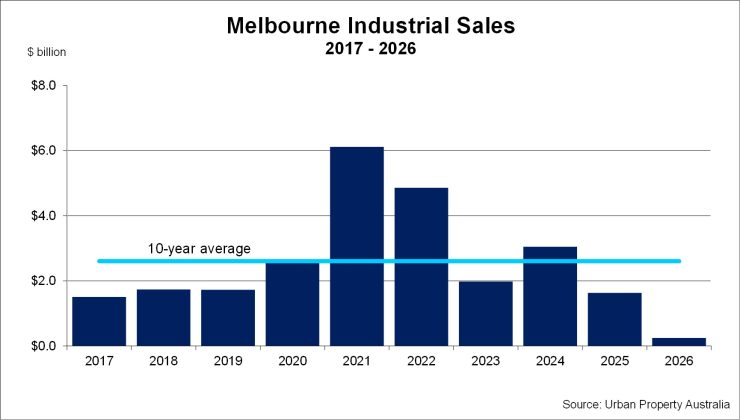
- Sales activity in Melbourne’s industrial property market has been relatively limited to date this year with almost $250 million transacted, well below average;
- Tenant demand has softened, adversely impacted by the Iran conflict with many occupiers postponing leasing decisions with increased energy prices likely to continue to hinder leasing activity;
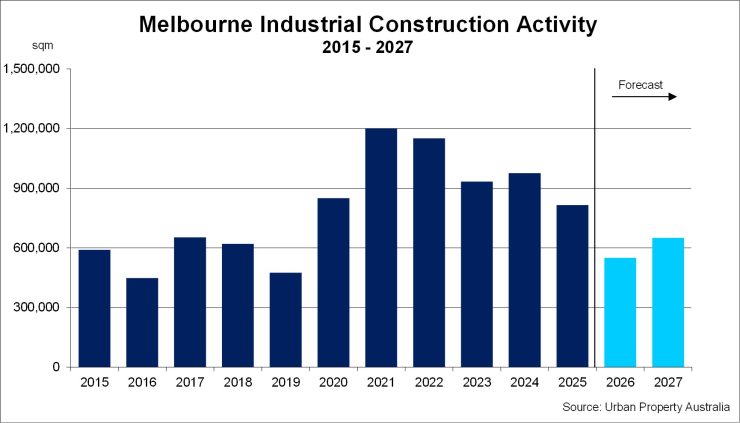
- New industrial supply in the Melbourne industrial market is forecast to total 550,000 square metres this year, significantly lower than the 850,000 square metres of new stock delivered last year.
Industrial Market Summary
With leasing activity having picked up boosted by the resilience of the domestic economy through the second half of 2025, more recently tenant demand has softened, adversely impacted by the Iran conflict with many occupiers postponing leasing decisions. Looking ahead, tenant demand is forecast to ease, as the increased energy prices (and subsequently) freight costs likely to moderate occupier investment decisions to the leading industries of retail and logistics in particular. While sales activity in Melbourne’s industrial property market has been relatively limited to date this year with almost $250 million transacted, well below average.
Sales Volume / Yields
While sales activity in Melbourne’s industrial property market has been relatively limited to date this year with almost $250 million transacted, yields appear to have stabilised. Investment volumes are expected to remain well below average annual levels with the state taxation policy affecting offshore investment. Melbourne yields are also being impacted by taxation policy, with the yield spread between Melbourne and Sydney and Brisbane industrial markets widening. Average Melbourne prime industrial yields have remained stable over the past year at 5.85% with average secondary yields sitting at 6.75% as at March 2026. While yields have remained stable over the past 12 months, the recent interest rate rises are likely to maintain yields at their current levels through 2026.
New Supply / Land Values
According to Urban Property Australia research, new industrial supply in the Melbourne industrial market is forecast to total 550,000 square metres this year, significantly lower than the 850,000 square metres of new stock delivered last year. New supply levels have moderated in the Melbourne industrial market as developers have adopted a pre-lease strategy while speculative development has tempered. New developments located in the South Eastern region accounts for 35% followed by the Western region which is projected to account for 25% of the stock forecast to be delivered to the Melbourne industrial market in 2026. Of the stock scheduled for completion in 2026, 40% of new industrial supply is currently pre-committed. Looking ahead, Urban Property Australia research projects that supply will pick up in 2027 boosted by the completion of Amazon’s distribution centre. While industrial land values in Melbourne key industrial markets remained stable through the 12 months to March 2026, values face downward pressure across the regions resulting from rising construction costs impacting feasibilities. As a result of the feasibility challenges, owner occupiers have been able to outbid institutions for development land.
Tenant Demand
With leasing activity having picked up boosted by the resilience of the domestic economy through the second half of 2025, more recently tenant demand has softened, adversely impacted by the Iran conflict with many occupiers postponing leasing decisions. Leasing activity in 2026 to date was dominated by stock in the Western and Northern regions which accounted for almost 65% of all take up according to Urban Property Australia research. Logistics and retail trade occupiers, continue to lead leasing activity with the two industries collectively accounting for 42% of total Melbourne industrial leasing activity in 2025 followed by manufacturing. Looking ahead, tenant demand is forecast to ease, as the increased energy prices (and subsequently) freight costs likely to moderate occupier investment decisions to the leading industries of retail and logistics in particular. Tenants continue to be focused on prime accommodation, as occupiers seek greater efficiency and automation capabilities.
Vacancy / Rents
With leasing activity across the Melbourne industrial market softening coupled with new supply exceeding take up, the vacancy rate of the Melbourne industrial market continued to increase. According to Urban Property Australia research, the vacancy rate of Melbourne industrial market increased to 4.5% – its highest rate in five years. Vacancy rose in all regions, with the exception of the Western sub-region. Urban Property Australia research estimates that the industrial vacancy rate in the South East was 3.7% in March 2026. The industrial vacancy rate of the West at 4.8% was the highest of Melbourne’s industrial precincts, with the vacancy rate of the North rising to 4.5%.
Reflecting the easing leasing activity and elevated vacancy rate, rents have remained steady in the Melbourne industrial market. Over the 12 months to March 2026, according to Urban Property Australia research Melbourne prime industrial rents grew by just 0.5% with secondary rents remaining steady. Incentive levels remain elevated as landlords competitively seek to attract occupiers in the high vacancy rate environment. Urban Property Australia expects that incentive levels have peaked albeit remaining the elevated levels through 2026 until economic conditions become less volatile.
Copyright © 2026 by Urban Property Australia All rights reserved. No part of this publication may be reproduced in any form, by microfilm, xerography, electronically or otherwise, or incorporated into any information retrieval system, without the written permission of the copyright owner.